How to Get an Israeli Mailing Address or PO Box From the USA


A surprising number of Israeli bureaucratic processes still run on physical mail sent to a physical address inside Israel — not your address in the US. Bituach Leumi (National Insurance) notices, letters from the Population and Immigration Authority, Rabbinate correspondence, court and beit din documents, and even some bank and Teudat Zehut–related notices are routinely mailed to whatever Israeli address is on file, regardless of where you actually live.
If you’re an Israeli citizen in the US and you don’t have a reliable Israeli address anymore, this creates a real problem: important letters can go to an old apartment, an outdated family address, or nowhere at all — and you may not find out about a deadline or requirement until it’s already been missed.
Why You Might Need an Israeli Address While Living Abroad
A few situations where this comes up often:
- Bituach Leumi correspondence about your status, pension, or debts, which may be mailed rather than emailed.
- Population and Immigration Authority (Misrad HaPnim) notices, including anything related to your Teudat Zehut record.
- Rabbinate or rabbinical court documents, particularly in divorce, marriage registration, or conversion-related matters.
- Bank and financial correspondence tied to an Israeli account, if you’ve kept one open.
- Legal notices or court documents, if you have any open matter in Israel.
- Official government mail generally — many Israeli institutions still default to postal mail to the address in their records, even years after someone has moved abroad.
If your address on file is outdated, the safest assumption is that you’re missing mail you don’t know about.
Option 1: Use a Family Member’s or Friend’s Address
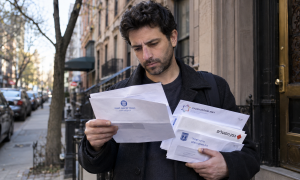
A few important details about how this actually works:
- The delivery address you register has to be an address inside Israel — you can’t redirect official Israeli mail to a US address through this process.
- The request generally has to be submitted in person at the Israeli mission, and there’s usually an appointment involved.
- The owner of the property you’re listing as your new address needs to consent to receiving your mail there. In practice, that consent typically needs to be given in person at a Population and Immigration Authority office in Israel — or through a notarized power of attorney, or one signed before a consular official, if the property owner can’t go in person.
In other words: it’s not just a matter of writing down your cousin’s address on a form. The property owner has an active role in confirming it, and if that step doesn’t happen, the change won’t go through.
Good for: people with a trusted family member or friend in Israel who’s willing to formally take on this role and reliably pass mail along or notify you of anything important. Limitation: you’re dependent on that person actually checking the mail and telling you what arrived — and getting their formal consent registered takes some coordination.
Option 2: Rent a PO Box From Israel Post (Ta Do’ar)
Israel Post offers PO box rentals, known in Hebrew as a ta do’ar (תא דואר). This is a standard option that many Israelis — not just people abroad — use, especially in areas where home delivery isn’t fully reliable, or simply for a stable, private mailing address.
A few practical points if you’re doing this from the US:
- Opening a PO box generally requires proof of identity and is typically arranged in person at a post office branch in Israel. It isn’t something you can set up remotely through Israel Post’s website the way you might expect from a US mail service.
- Because of that, this option tends to work best if you (or someone you trust) can visit Israel periodically to set it up and check it, or if you’re planning a trip anyway and want to establish an address while you’re there.
- A PO box alone doesn’t solve the “I’m not in Israel to check it” problem — someone still has to physically collect the mail unless you pair it with a forwarding arrangement (see below) or plan around your own visits.
Good for: people who visit Israel periodically and want a stable, official-feeling address that isn’t tied to a specific relative’s apartment. Limitation: setup is generally in-person, and it doesn’t include automatic forwarding abroad.
Option 3: A Private Virtual Mailbox or Mail-Forwarding Service
There’s also a growing category of private companies that offer a real Israeli street address, receive mail on your behalf, and notify you (often by scanning or photographing what arrives) so you can decide whether to have it opened, forwarded to the US, or simply logged.
This can be a good fit for people who don’t expect to visit Israel regularly and want ongoing digital visibility into what’s arriving, rather than relying on a relative to remember to check a mailbox.
A couple of things worth checking carefully before you sign up with any private mail service:
- What the address can and can’t be used for. Some virtual address providers explicitly state their address cannot be used for certain purposes — for example, official business registration. If you need the address for a specific government process, confirm in writing that it’s acceptable for that specific use before you rely on it.
- Whether they can forward physical originals, not just digital scans — some official documents (court papers, certain bank or Rabbinate correspondence) may need to reach you as originals, not photos.
- Where the company is actually based and regulated. Not every service marketed as an “Israeli virtual address” is operated by an Israeli company; verify who you’re actually contracting with.
Good for: people who won’t be in Israel regularly and want ongoing, remote visibility into their mail. Limitation: not a substitute for your official address of record with the Population and Immigration Authority unless you also complete that separate registration (see Option 1); and not every provider is appropriate for every official purpose.
Choosing the Right Option
A rough way to think about it:
- Mostly personal or informational mail, and you have someone reliable in Israel → a family/friend address, formally registered, is usually simplest.
- You travel to Israel periodically and want something independent of any one relative → an Israel Post PO box, set up on your next visit.
- You rarely or never visit Israel, and want ongoing digital visibility without depending on a specific person → a private virtual mailbox/forwarding service, after checking exactly what it’s approved for.
- You have an active legal, rabbinical, or Bituach Leumi matter open right now → don’t wait to figure this out — an outdated address on a live case can mean missed deadlines. This is worth prioritizing regardless of which option you choose.
Many people end up combining approaches: a formally registered address with a relative for anything government-related, plus a private forwarding service for day-to-day convenience.
How We Can Help — and What We Don’t Do
Assist Israel helps clients figure out which of these options actually fits their situation, and then handles the logistics — which is often the part people get stuck on from abroad. That includes:
- Helping you prepare and submit the change-of-mailing-address request through the Israeli consulate nearest you;
- Coordinating the property owner’s consent process with the Population and Immigration Authority, including arranging a power of attorney where needed;
- Explaining which type of address will and won’t work for a specific process you’re dealing with (for example, a Bituach Leumi matter vs. a Rabbinate matter);
- Acting as your point of contact to track down mail that may already be sitting at an outdated address, where possible.
We’re not Israel Post, we’re not the Population and Immigration Authority, and we don’t own or operate a mail-forwarding business ourselves — we help you navigate the official channels and connect with the right service for your situation. We also can’t guarantee processing times or policies set by Israeli government offices, since those are outside our control.
